
A TAVOLA: Cities That Know How to Eat & Drink - Modena
Updated: 4 days ago
Where Time Is an Ingredient

Modena is the sort of place that makes you reconsider the meaning of “simple food.”
A piece of Parmigiano. A slice of prosciutto. A few drops of balsamic. A glass of sparkling red wine.
None of it sounds particularly complicated.
Then you discover that the cheese may have aged for years, the vinegar for decades, the wine comes from vineyards tended by generations of the same families, and somebody’s nonna still has very strong opinions about how thick the pasta should be.
In Modena, patience isn't a virtue.
It's practically a food group.
Black Gold in the Attic
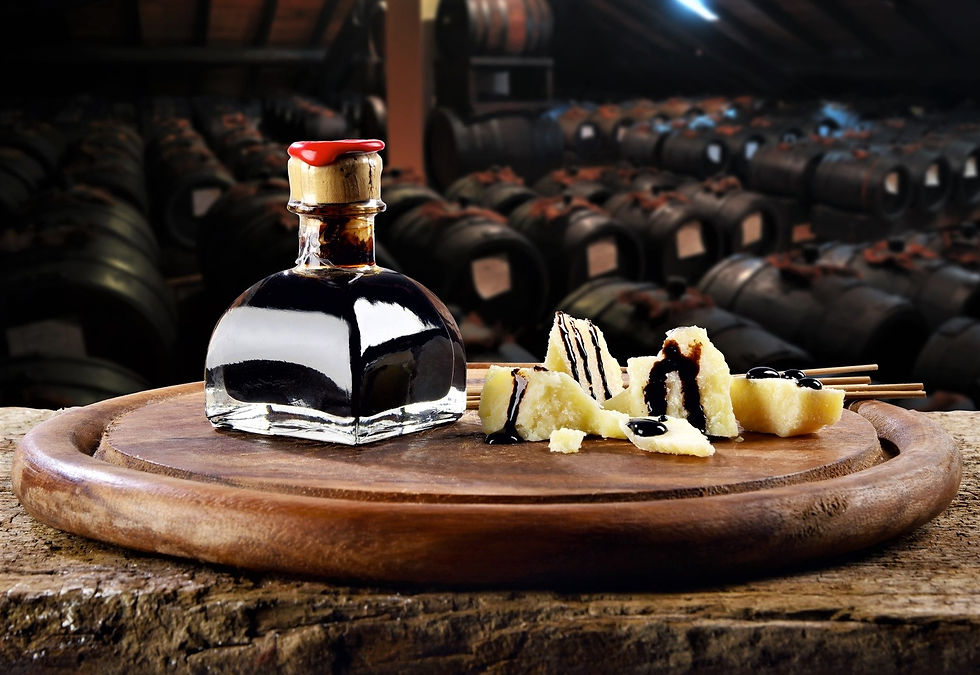
For centuries, Modenese families have made Aceto Balsamico Tradizionale di Modena from cooked grape must, slowly concentrating and ageing it through a series of progressively smaller wooden barrels.
Traditionally, those barrels — the batteria — became part of the family.
A new set might be started to mark a marriage or the birth of a child. Then it waited.
And waited.
The barrels lived in the acetaia, often high in the house where Modena's hot summers and cold winters helped the vinegar mature. Over the years, evaporation concentrates it into something glossy, dark and almost impossibly complex.
Calling the result “vinegar” feels slightly unfair.
A few drops over aged Parmigiano can deliver sweetness, acidity, wood, dried fruit and caramel all at once.
This is Modena's great culinary lesson: some ingredients shouldn't be rushed.
Gnocco Fritto

Then Modena does something considerably less patient.
It throws dough into hot fat.
Gnocco fritto begins as a simple dough rolled thin and cut into pieces. Once fried, it balloons into warm, golden pillows — crisp at the edges, tender and almost hollow inside.
They're brought to the table hot, usually surrounded by cured meats.
Lay a translucent slice of prosciutto, coppa or mortadella across one and the warmth begins melting the fat almost immediately.
Add a piece of Parmigiano. Maybe a little soft cheese. Then eat it with your hands.
This isn't precious food. It's everyone-reach-in food — the kind of plate that keeps disappearing while people insist they're saving room for dinner.
Nobody is saving room for dinner.
Tortellini in Brodo

Yes, Bologna claims tortellini.
Modena has opinions on the matter.
The traditional territory of tortellini straddles the two cities, and the little stuffed pasta has become part of the culinary identity of both. There's even a monument to the tortellino in nearby Castelfranco Emilia.
Around a Modenese family table, tortellini are tiny.
Very tiny.
Fresh egg pasta is rolled thin, filled with a deeply savoury mixture traditionally involving pork, prosciutto, mortadella and Parmigiano, then folded one at a time.
Making enough for a family meal requires a table, several sets of hands and preferably someone who has been doing it for fifty years.
Then all that work disappears into steaming meat broth.
That's the beauty of it. No foam. No tweezers. No architectural garnish.
Just an intensely flavoured golden broth and dozens of little parcels of pasta made by hand.
The luxury is in the work nobody sees.
Lambrusco & Nocino

If Modena's food is rich, its wine knows exactly what to do about it.
Lambrusco is sparkling, refreshing and wonderfully suited to the table.
And there isn't just one.
Around Modena you'll find Sorbara — lighter, delicate and fresh — alongside Salamino and the darker, fuller Grasparossa di Castelvetro, grown among the hills south of the city.
That fizz and acidity are exactly what you want beside pork, Parmigiano, fried dough and filled pasta.
Then, when everyone has eaten far more than originally intended, out comes Nocino.
Green walnuts are traditionally infused to create a dark, aromatic digestivo with notes of walnut, spice and bittersweet herbs. Modena's own tourism authority offers very sensible advice: don't leave the table without a glass.
That's advice we can get behind.
Why Bar Corso Loves Modena

Modena understands something that sits right at the heart of Bar Corso:
great Italian food doesn't need to show off.
And most importantly, it needs people around the table.
A few slices of salumi become dinner when the wine is good and the company is better. Pasta doesn't need twenty ingredients when the dough, filling and sauce are treated properly. A bitter drink before dinner wakes up the appetite. A digestivo afterward gives everyone an excuse to stay another twenty minutes.
Or forty.
At Corso, that's the Italy we're interested in.
Not simply recreating old recipes, but carrying forward the philosophy behind them: cook carefully, pour generously, share everything and don't rush people away from a good table.
Modena has been perfecting that philosophy for generations. We feel right at home.


